

Yes – a kitchen renovation can increase your home’s value.
But that answer is too simple to be useful.
The better question is: what kind of kitchen renovation adds value without wasting money? That’s where things get interesting. A smart kitchen remodel can make your home easier to sell, help buyers emotionally connect with the property, and let you recover a meaningful share of what you spent. But a poorly planned remodel can do the opposite. You can spend too much, choose the wrong finishes, over-improve for the neighborhood, or build a kitchen that looks great in photos but does not make financial sense.
A great kitchen can help sell a house.
A bad kitchen can stop a sale cold.
An overbuilt kitchen can quietly eat your profit.
We break down what actually matters: cost, resale value, return on investment, the upgrades buyers notice, and where homeowners commonly overspend.
The Real Answer: Kitchens Matter, But ROI Depends on Scope
Kitchens carry a lot of weight in resale because buyers do not see them as just another room. They see the kitchen as the center of daily life. It is where people cook, gather, unload groceries, help with homework, host friends, and start the day.
That emotional pull matters.
But emotion does not erase math.
A kitchen remodel is not automatically a profit machine. The return depends on three things:
- How much you spend
- How much value the project adds
- Whether the finished kitchen matches your local market
That last point is the one homeowners often miss.
A $40,000 kitchen in one neighborhood might be perfectly reasonable. The same kitchen in another market might be too cheap, too expensive, or simply not what local buyers expect. That is why national ROI numbers are useful as a starting point, but they should never be treated as a guarantee.
The smartest renovation is not always the biggest one. In many cases, the best financial return comes from a focused, midrange update: new cabinet fronts or paint, better countertops, modern lighting, updated hardware, new sink and faucet, and a matching appliance package.
That kind of renovation may not win a design award. But it often solves the exact problem buyers care about: the kitchen feels clean, current, functional, and move-in ready.
Kitchen Remodeling Cost vs. Value: What the Data Usually Shows
The cost-versus-value equation is not about spending the most money. It is about spending the right money.
Minor and midrange kitchen updates often produce a stronger percentage return than luxury remodels because the upfront cost is lower. A high-end renovation may add more resale value in raw dollars, but it also costs so much more that the percentage of cost recovered can drop sharply.
That difference matters.
For example, a minor kitchen remodel might recover a much larger share of its cost than a major upscale remodel. But that does not mean every homeowner should do the smallest possible project. It means the project should fit the house, the neighborhood, and the buyer pool.
Here is the practical way to think about it:
- If your kitchen is dated but functional, a cosmetic refresh may give you the best return.
- If your kitchen layout is poor, a deeper remodel may be necessary even if the percentage ROI is lower.
- If your home is in a luxury market, higher-end finishes may be expected, not optional.
- If the rest of the house is dated, an expensive kitchen alone may create an awkward mismatch.
The goal is not to build the nicest kitchen possible.
The goal is to build the right kitchen for the home.
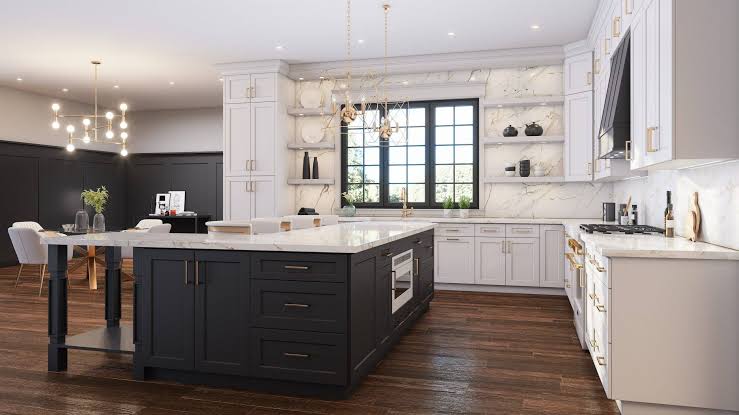
Typical Kitchen Renovation Cost Tiers
There is no single “normal” kitchen renovation cost. Prices change based on location, labor availability, material choices, layout changes, permits, and the condition of the existing home.
Still, most projects fall into one of three broad categories.
1. Minor Kitchen Remodel
A minor kitchen remodel is mostly cosmetic. You are not moving walls. You are not changing the footprint. You are not relocating plumbing or gas lines.
You are making the existing kitchen look and function better.
This can include:
- Painting or refacing existing cabinets
- Replacing cabinet hardware
- Installing new countertops
- Adding a new sink and faucet
- Updating light fixtures
- Replacing dated flooring
- Installing a simple backsplash
- Adding a matching appliance package
- Fresh paint on walls and trim
This is often the sweet spot for resale. It gives buyers the visual refresh they want without the heavy cost of a full gut renovation.
A minor remodel works best when the cabinet boxes are still solid, the layout is usable, and the kitchen mainly looks tired rather than broken.
2. Major Midrange Kitchen Remodel
A major midrange remodel is a much bigger project. This is where you remove most or all of the existing kitchen and replace it with new materials.
This may include:
- New cabinets
- New countertops
- New appliances
- Updated plumbing fixtures
- New flooring
- New lighting plan
- Electrical updates
- Layout improvements
- Code-related upgrades
- New backsplash and finishes
This kind of renovation can make a huge difference, especially if the old kitchen is functionally poor. But the budget rises quickly. Once you start moving plumbing, upgrading electrical, changing walls, or correcting old work, the project becomes less cosmetic and more construction-heavy.
That is not necessarily bad. Sometimes it is exactly what the house needs.
But the ROI percentage usually drops because the initial investment is much higher.
3. Upscale Kitchen Remodel
An upscale kitchen remodel is the luxury tier.
This may include:
- Custom cabinetry
- Professional-grade appliances
- Premium stone countertops
- Structural changes
- Designer lighting
- Built-in refrigeration
- High-end tile or slab backsplash
- Custom storage systems
- Large islands
- Specialty finishes
This can be the right choice in a high-end home where buyers expect luxury. In that market, an underbuilt kitchen can actually hurt the sale.
But in a typical midrange home, an upscale remodel can become a financial trap. You may create a beautiful kitchen that the next buyer likes — but not enough to pay you back for it.
That is the heart of renovation ROI: buyers may appreciate your choices without fully reimbursing you for them.
Cost vs. Value Snapshot
The figures below are examples from widely cited remodeling-industry sources and should be updated before publication with the most current year’s data.
| Project Type | Example Job Cost | Example Value Added at Resale | Example ROI |
|---|---|---|---|
| Minor Kitchen Remodel, Midrange | $28,986 | $23,133 | 79.8% |
| Complete Kitchen Renovation | $100,000 | $67,000 | 67.0% |
| Kitchen Upgrade | $50,000 | $30,000 | 60.0% |
| Major Kitchen Remodel, Midrange | $80,809 | $31,715 | 39.2% |
| Major Kitchen Remodel, Upscale | $158,162 | $49,977 | 31.6% |
| New Wood Flooring | $6,000 | $7,800 | 130.0% |
| Hardwood Flooring Refinish | $3,500 | $4,500 | 129.0% |
The pattern is clear: smaller, targeted improvements often produce stronger percentage returns.
But there is an important caveat.
ROI tables are averages. They do not know your street, your buyer pool, your home’s condition, or your local labor market. Use them as a guide, not a promise.
Where the Money Goes in a Kitchen Remodel
Kitchen budgets can feel mysterious until you break them down. The spending is not evenly distributed. A few categories usually take up most of the budget.
Cabinetry and Hardware: Often 30–35%
Cabinets are usually the biggest line item because they define the kitchen visually and functionally. Stock cabinets cost less. Semi-custom gives more flexibility. Custom cabinets can be beautiful, but they can also consume the budget fast.
Before replacing cabinets, ask one question:
Are the cabinet boxes solid and is the layout workable?
If yes, painting or refacing may be enough. If no, replacement may be worth it.
Labor and Installation: Often 15 – 25%
Labor costs vary heavily by region. A remodel in a high-cost metro area can be dramatically more expensive than the same project in a lower-cost market.
Labor also rises when the project involves:
- Moving plumbing
- Adding circuits
- Changing gas lines
- Removing walls
- Correcting old work
- Pulling permits
- Installing heavy stone
- Custom carpentry
This is where “simple” remodels become expensive. The visible materials are only part of the story. The hidden work behind the walls often drives the final bill.
Appliances: Often 10 – 15%
You do not need luxury appliances for most resale-focused remodels. What buyers usually want is a clean, modern, matching set.
A mismatched appliance package can make the kitchen feel patched together. Stainless steel remains a safe choice in many markets, though finishes vary by region and buyer preference.
Energy-efficient models can also help, especially if the listing highlights lower operating costs.
Countertops: Often 10 – 15%
Countertops carry a lot of visual weight. They are one of the first things buyers notice.
Quartz is popular because it is durable, low-maintenance, and available in many neutral designs. Granite can still work well, but some busy patterns feel dated to buyers. Laminate has improved, but in many resale situations it still reads as budget-grade.
For broad appeal, light or neutral countertops with subtle movement are usually safer than bold, highly personal choices.
Flooring: Often 5 – 10%
Kitchen flooring needs to handle water, foot traffic, dropped dishes, pets, and daily wear.
Common options include:
- Luxury vinyl plank
- Tile
- Engineered wood
- Hardwood, where appropriate
- Durable laminate products
If the rest of the home has hardwood, continuing or refinishing it through the kitchen can create a more seamless and higher-end feel. But water resistance and maintenance should be considered carefully.
Lighting and Electrical: Often 5–10%
Lighting is one of the most underrated upgrades in a kitchen.
A single overhead fixture rarely works well. A good kitchen needs layers:
- Ambient lighting for the whole room
- Task lighting for counters and prep areas
- Accent lighting for islands, shelves, or design features
Under-cabinet lighting is especially valuable because it makes the kitchen easier to use and more attractive at the same time.
Plumbing and Fixtures: Often 4 – 7%
A new sink and faucet can make the whole kitchen feel more current. Large single-basin sinks, undermount designs, and pull-down faucets are common buyer-friendly choices.
Relocating plumbing, however, is a different matter. Moving a sink or dishwasher can add cost quickly.
Backsplash: Often 2 – 5%
A backsplash is a smaller cost compared with cabinets or countertops, but it has a big visual effect.
For resale, simple usually wins. White subway tile, handmade-look tile, soft neutrals, and quiet patterns tend to age better than loud trend-driven designs.
Contingency Fund: 10 – 15%
This is not optional.
Old kitchens hide surprises. Once demolition starts, you may find water damage, unsafe wiring, uneven floors, mold, old plumbing, or previous DIY work that needs correction.
A contingency fund protects the project from turning into a financial panic.
If the budget only works when everything goes perfectly, the budget does not really work.
The Best Kitchen Upgrades for Resale Value
When renovating for resale, every choice should pass one test:
Will this matter to a broad group of likely buyers?
Not every upgrade does.
A built-in espresso station may be fun. A bold tile pattern may look great on social media. A specialty imported stone may feel luxurious. But if buyers do not value those choices enough to pay more for the home, they are personal upgrades, not resale investments.
Here are the upgrades most likely to matter.
Cabinets: The Face of the Kitchen
Cabinets set the tone before anything else. If they look dated, the whole kitchen feels dated.
Paint Existing Cabinets
If the cabinet boxes are solid and the layout works, professional painting can be one of the highest-impact updates. It is much cheaper than full replacement and can completely change the room.
Safe resale colors include:
- White
- Soft gray
- Warm off-white
- Light wood tones
- Navy or muted green as an island accent
The finish quality matters. Poor cabinet painting chips, streaks, and looks amateur fast. This is one place where professional prep and spraying can be worth it.
Reface Cabinets
Refacing sits between painting and replacing. You keep the cabinet boxes but replace the doors and drawer fronts. This can give the kitchen a new look without full demolition.
It works best when the current layout is good but the door style is dated.
Replace Cabinets
Sometimes replacement is the right call. If the boxes are damaged, the layout is poor, or storage is badly lacking, new cabinets may be necessary.
For resale, simple Shaker-style cabinets remain a safe choice in many markets. They are clean, familiar, and flexible across design styles.
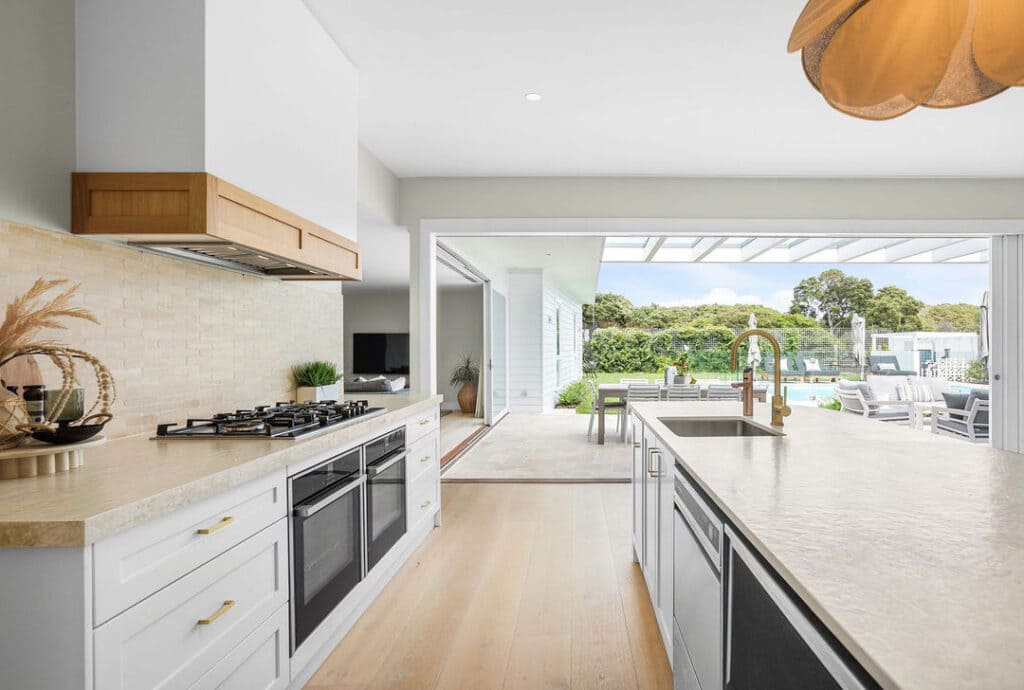
Update Hardware
Hardware is small, but it matters.
Old knobs and pulls can make new cabinets feel dated. Modern hardware in brushed nickel, black, brass, or chrome can refresh the entire room for a relatively low cost.
Just keep it consistent with the rest of the kitchen.
Countertops: The Surface Buyers Notice
Countertops are both practical and emotional. Buyers picture themselves cooking, cleaning, entertaining, and living on that surface.
Dated tile, chipped laminate, stained grout, or damaged counters can drag down the whole room.
For resale, the safest choices are usually:
- Quartz
- Granite with a quiet pattern
- Solid surface in the right market
- Butcher block as a selective accent, not necessarily everywhere
Quartz is popular because it is durable, non-porous, and low maintenance. It also gives homeowners a stone-like look without the sealing requirements of some natural stone.
For the broadest appeal, avoid extreme colors or dramatic patterns unless the home’s price point and design style support them.
Appliances: Matching Matters More Than Luxury
Most buyers do not need professional-grade appliances. They do notice when appliances look old, mismatched, or poorly maintained.
A clean, matching, energy-efficient appliance suite can make the kitchen feel move-in ready.
That does not mean every kitchen needs a luxury range. In many homes, a reliable midrange appliance package is the smarter investment.
Spend based on the home’s value. A starter home does not need a luxury appliance suite. A luxury home probably does.
Flooring: Durability Comes First
Kitchen floors work hard. They deal with spills, foot traffic, pets, dropped pans, and constant cleaning.
Good resale flooring should be:
- Durable
- Easy to clean
- Visually consistent with the home
- Appropriate for the price point
- Resistant to moisture where possible
Luxury vinyl plank has become popular because it is durable and water-resistant. Tile is also strong, though it can feel cold or hard underfoot. Hardwood can look beautiful, especially when it connects the kitchen to surrounding rooms, but it requires more care around water.
If existing hardwood is in good shape, refinishing may be one of the most cost-effective improvements in the home.
Lighting: The Upgrade People Feel Immediately
Bad lighting makes even expensive kitchens look flat.
Good lighting makes a kitchen feel larger, cleaner, and more welcoming.
A strong kitchen lighting plan usually includes:
- Recessed ceiling lights
- Under-cabinet task lighting
- Pendant lights over an island or peninsula
- A fixture over the dining area, if applicable
- Dimmer switches
Under-cabinet lighting is especially useful. It helps with cooking and gives the kitchen a polished look in the evening.
Lighting is not just decoration. It changes how the room functions.
Backsplash, Sink, and Faucet: Small Details, Big Effect
These are finishing touches, but buyers notice them.
A simple backsplash can make the kitchen feel complete. A modern faucet can make the sink area feel cleaner and more functional. A large undermount sink can be a practical upgrade that feels more expensive than it is.
For resale, avoid choices that are too personal. The goal is not to make every buyer love your exact taste. The goal is to make it easy for most buyers to imagine living with it.
The Overcapitalisation Trap
Overcapitalization happens when you spend more on a renovation than the home or neighborhood can support.
This is one of the biggest financial risks in kitchen remodeling.
You can build a beautiful kitchen and still make a poor investment.
For example, imagine spending $150,000 on a kitchen in a $500,000 home where nearby comparable homes have simple but updated kitchens. Buyers may admire the renovation, but they may not pay enough extra to justify the cost. Worse, the home may become difficult to appraise because the renovation pushes it beyond the local market.
That does not mean expensive kitchens are always bad. In a luxury neighborhood, a high-end kitchen may be necessary. But in a midrange market, luxury finishes can quickly become overspending.
The question is not “Is this beautiful?”
The question is “Will my likely buyer pay more for this?”
Use Comparable Sales Before You Spend
Before setting your kitchen budget, look at comparable homes that recently sold near you.
Pay attention to:
- Sale price
- Kitchen condition
- Cabinet style
- Countertop material
- Appliance level
- Flooring
- Lighting
- Layout
- Whether homes sold quickly or sat on the market
You are looking for the neighborhood standard.
If most comparable homes have quartz countertops and updated cabinets, your dated kitchen may be a liability. If most comparable homes have modest kitchens, a luxury renovation may not pay off.
Your goal is usually to meet or slightly exceed buyer expectations — not blow past them.
The 10 – 15% Budget Rule
A common rule of thumb is to keep the kitchen renovation budget around 10–15% of the home’s value.
So if a home is worth $500,000, a reasonable kitchen budget might fall somewhere around $50,000 to $75,000.
This is not a law. It is a guardrail.
Some homes need less. Some luxury homes justify more. Some kitchens need structural or safety work that changes the math. But the rule helps prevent a common mistake: spending a luxury-home budget on a midrange-home kitchen.
The kitchen should fit the house.
If the kitchen becomes dramatically nicer than the bathrooms, flooring, exterior, and mechanical systems, buyers may notice the imbalance.
Talk to a Local Real Estate Agent Before Renovating
This may be the highest-return step in the entire process.
Before you spend thousands of dollars, ask two or three experienced local agents what buyers in your area actually care about.
Ask them:
- Would this renovation help resale?
- Which upgrades matter most in this neighborhood?
- Are buyers expecting quartz, granite, or something else?
- Are high-end appliances worth it here?
- Would a cosmetic refresh be enough?
- What price range should I avoid exceeding?
- Which features are buyers ignoring?
A good agent can save you from spending money on upgrades that will not move the sale price.
Even better, ask for examples of nearby homes where the kitchen helped or hurt the sale.
National data gives averages. Local agents give context.
DIY vs. Hiring Professionals
DIY can save money. It can also cost money if the work looks bad, fails inspection, causes damage, or has to be redone.
The safest approach is often a hybrid one: handle simple cosmetic tasks yourself and hire licensed professionals for technical, risky, or code-regulated work.
DIY-Friendly Tasks
These may be reasonable for a careful homeowner:
- Painting walls
- Installing cabinet hardware
- Removing old hardware
- Simple demolition
- Installing some backsplashes
- Assembling ready-to-assemble cabinets
- Replacing basic decorative fixtures, where allowed
Even then, quality matters. Sloppy DIY work can make a renovated kitchen feel cheap.
Hire a Professional For
Some jobs are not worth gambling on:
- Electrical work beyond basic fixture swaps
- Plumbing line changes
- Gas lines
- Structural wall removal
- Stone countertop installation
- Major cabinet installation
- Permit-heavy work
Electrical mistakes can start fires. Plumbing mistakes can cause hidden leaks. Gas mistakes can be deadly. Structural mistakes can damage the home.
This is not the place to prove a point.
How to Vet a Tradie
A good tradie can make the project smoother. A bad one can turn the renovation into months of stress and extra cost.
Before hiring, do the boring work:
- Get at least three itemized bids
- Verify license status
- Confirm insurance directly with the insurer
- Ask for recent references
- Look at completed projects
- Clarify who is doing the work
- Ask about permits
- Get a written contract
- Confirm the payment schedule
- Define change-order rules
- Put material selections in writing
Do not rely on a vague estimate. A kitchen remodel has too many moving parts.
The contract should spell out the scope, materials, timeline, payment milestones, and what happens if hidden problems appear.
Common Kitchen Renovation Mistakes
A good renovation is partly about what you choose. It is also about what you avoid.
Mistake 1: Ignoring the Layout
A kitchen can have beautiful finishes and still fail if the layout is bad.
The sink, stove, fridge, dishwasher, trash, prep area, and pantry all need to work together. If the dishwasher blocks a walkway, the fridge opens into a wall, or there is nowhere to prep food, buyers will feel the problem immediately.
The classic kitchen work triangle still matters, but modern kitchens also need zones:
- Prep zone
- Cooking zone
- Cleaning zone
- Storage zone
- Serving or gathering zone
A pretty kitchen that is annoying to use is not a successful renovation.
Mistake 2: Choosing Trends Over Longevity
Trendy choices can be fun, but they are risky for resale.
Bold tile, unusual cabinet colors, highly patterned stone, or statement fixtures may appeal to you but narrow the buyer pool.
That does not mean the kitchen should be boring. It means permanent materials should be chosen carefully.
Use safer choices for:
- Cabinets
- Countertops
- Flooring
- Backsplash
- Expensive fixtures
Then add personality with items that are easy to change:
- Rugs
- Bar stools
- Art
- Decor
- Small lighting accents
- Paint
Buyers are more comfortable with a clean canvas than a kitchen that feels like someone else’s strong personal statement.
Mistake 3: Skimping on Storage
Storage sells.
Buyers notice when a kitchen has no pantry, shallow drawers, wasted corners, or cabinets that stop awkwardly below the ceiling.
Good storage can include:
- Deep drawers for pots and pans
- Pull-out trash and recycling
- Pantry cabinets
- Ceiling-height cabinetry
- Drawer organizers
- Island storage
- Vertical tray storage
- Corner solutions
A beautiful kitchen with nowhere to put anything does not feel high-end. It feels frustrating.
Mistake 4: Bad Lighting
Lighting deserves repeating because it is so often done poorly.
A single ceiling fixture is not enough. A kitchen needs light where people actually work.
Under-cabinet lighting, recessed lights, pendants, and dimmers can change the feel of the room immediately.
Good lighting makes inexpensive materials look better. Bad lighting makes expensive materials look worse.
Mistake 5: Forgetting the Rest of the House
A kitchen renovation should not make the rest of the home feel neglected.
If the kitchen is brand new but the bathrooms, flooring, paint, roof, or HVAC are clearly dated, buyers may question the overall condition of the home.
The kitchen matters, but it does not exist in isolation.
Sometimes the smarter move is a smaller kitchen update plus improvements elsewhere.
Best Small Updates If Your Budget Is Tight
You do not always need a full remodel.
If the kitchen is dated but functional, focus on high-visibility improvements:
- Paint cabinets or walls
- Replace cabinet hardware
- Update lighting
- Install a new faucet
- Add or replace backsplash
- Replace worn flooring
- Upgrade countertops if budget allows
- Match appliances where possible
These updates can make the kitchen feel cleaner and more current without taking on a full construction project.
The key is consistency. A few coordinated upgrades usually look better than one expensive upgrade surrounded by old finishes.
When a Full Kitchen Remodel Makes Sense
A deeper remodel may be worth it when:
- The layout is truly poor
- Cabinets are damaged
- Plumbing or electrical needs major updating
- The kitchen is far below neighborhood expectations
- You plan to stay long enough to enjoy it
- The home’s price point supports the investment
- Comparable homes have significantly better kitchens
A full remodel is not automatically a bad ROI choice. It just needs a stronger reason than “the kitchen looks dated.”
Function, safety, market expectations, and long-term use can all justify a bigger project.
When You Should Avoid a Major Remodel
A major remodel may not make sense when:
- You are selling very soon and only need cosmetic improvements
- The current layout works
- The home is already near the top of neighborhood value
- Other parts of the home need more urgent repairs
- You would need to borrow heavily to complete the work
- Your design choices are highly personal
- Local buyers do not expect premium finishes
In those cases, a targeted refresh may be smarter.
The best renovation is not always the most dramatic one. Sometimes the best renovation is the one that solves the buyer’s objections without overspending.
Common Questions
Below you can see common questions we get asked.
Does a partial kitchen renovation still add value?
Yes. A partial renovation can add value, especially when the existing kitchen is functional but dated.
Painting cabinets, updating hardware, replacing countertops, adding better lighting, and installing a modern faucet can make a major visual difference without the cost of a full gut remodel.
In many resale situations, that is exactly the right move.
What kitchen upgrades usually have the best ROI?
The best ROI often comes from visible, practical upgrades:
- Cabinet painting or refacing
- New hardware
- Updated countertops
- Better lighting
- Modern sink and faucet
- Fresh backsplash
- Durable flooring
- Matching appliances
These upgrades improve the way the kitchen looks and feels without always requiring major construction.
Can a kitchen renovation hurt resale value?
Yes.
A kitchen renovation can hurt resale value if it is poorly done, too personal, too expensive for the neighborhood, or inconsistent with the rest of the home.
Bad DIY work, strange layouts, cheap-looking finishes, and over-the-top luxury materials in a modest home can all work against you.
Should I renovate my kitchen before selling?
Maybe.
If the kitchen is extremely dated or damaged, updates may help the home sell faster and for more money. But if the home is going to be sold as-is, or if buyers in your market prefer to renovate themselves, a full remodel may not be worth it.
Before deciding, compare recently sold homes and ask local agents what buyers are rewarding in your area.
Is it better to remodel for myself or for resale?
That depends on your timeline.
If you plan to stay for many years, your enjoyment matters. You can justify choices that may not fully pay back at resale because you will use the kitchen every day.
If you plan to sell soon, resale should guide the choices. Keep the design broad, durable, neutral, and appropriate for the local market.
Final Note
A kitchen renovation can absolutely increase your home’s value. But the best return usually comes from strategy, not spending.
Minor and midrange updates often perform well because they improve the kitchen buyers see and use every day without overloading the budget. Major remodels can be worthwhile when the layout is poor, the home’s price point supports it, or the local market expects a higher level of finish. Upscale remodels make the most sense in luxury homes where buyers demand luxury kitchens.
Before you start, look at comparable sales, talk to local agents, set a realistic budget, and leave room for surprises.
The smartest kitchen renovation is not the one that costs the most.
It is the one that makes the home more appealing, more functional, and more competitive — without spending beyond what the market will give back.